All work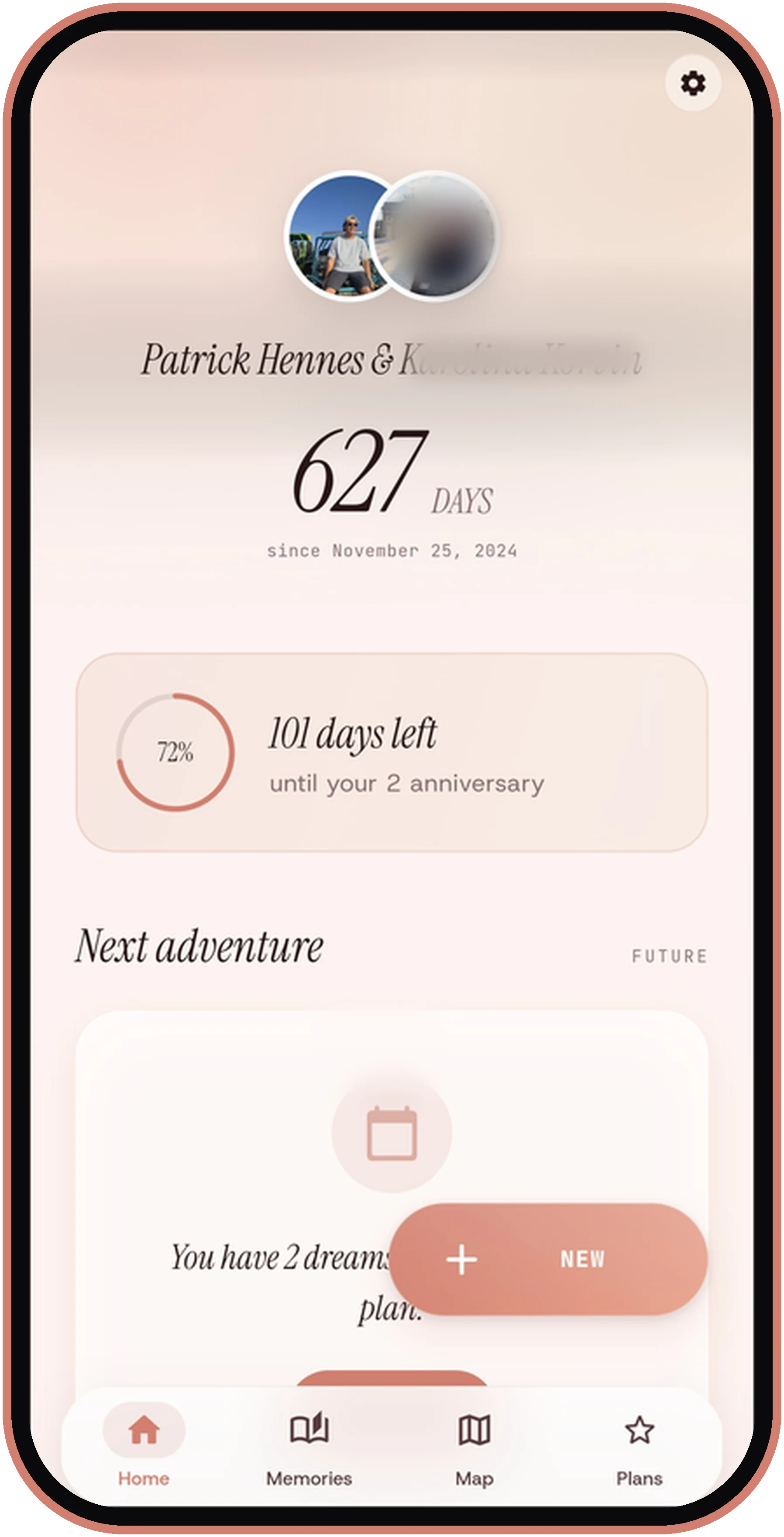
Pairfect
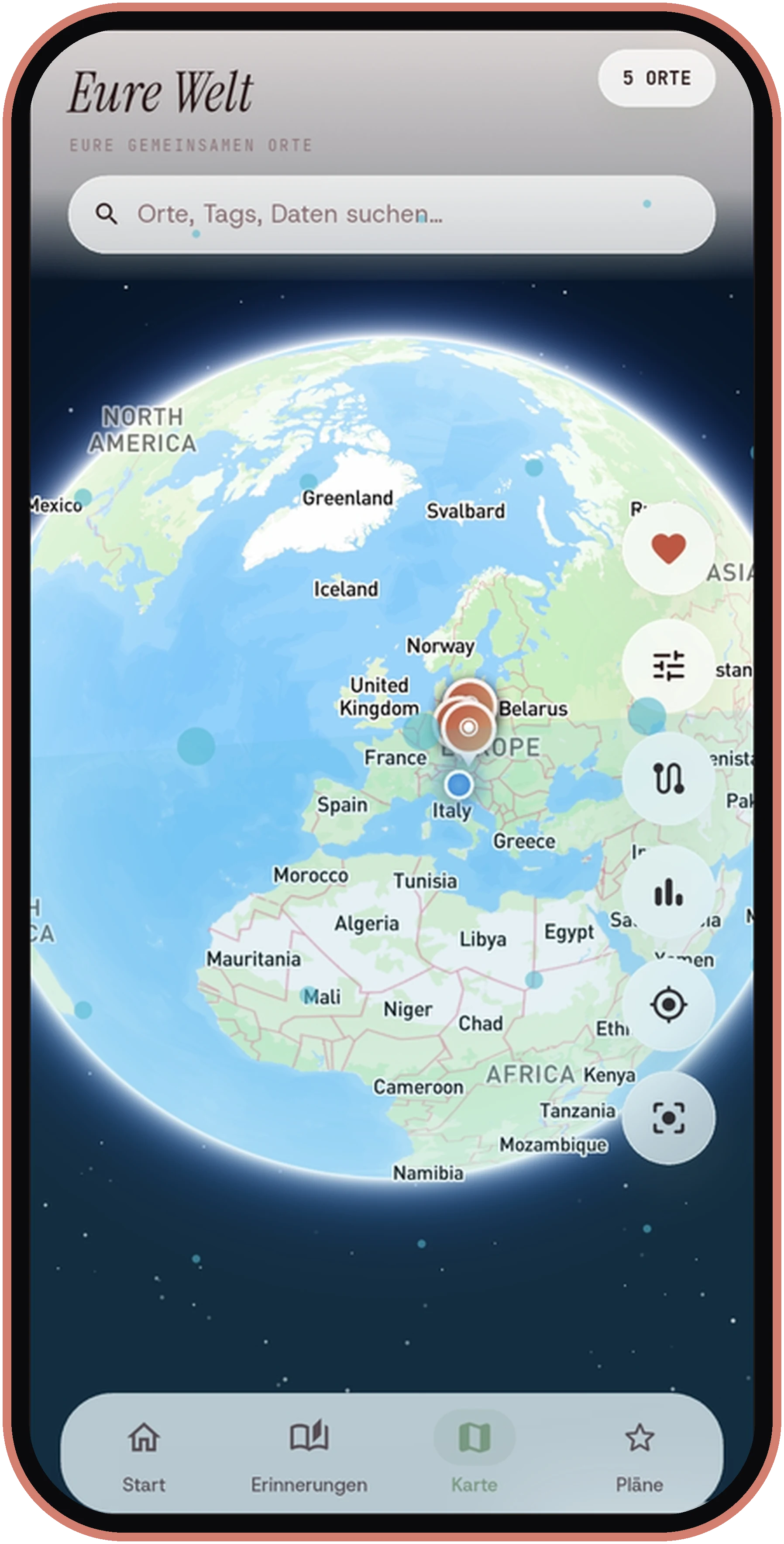
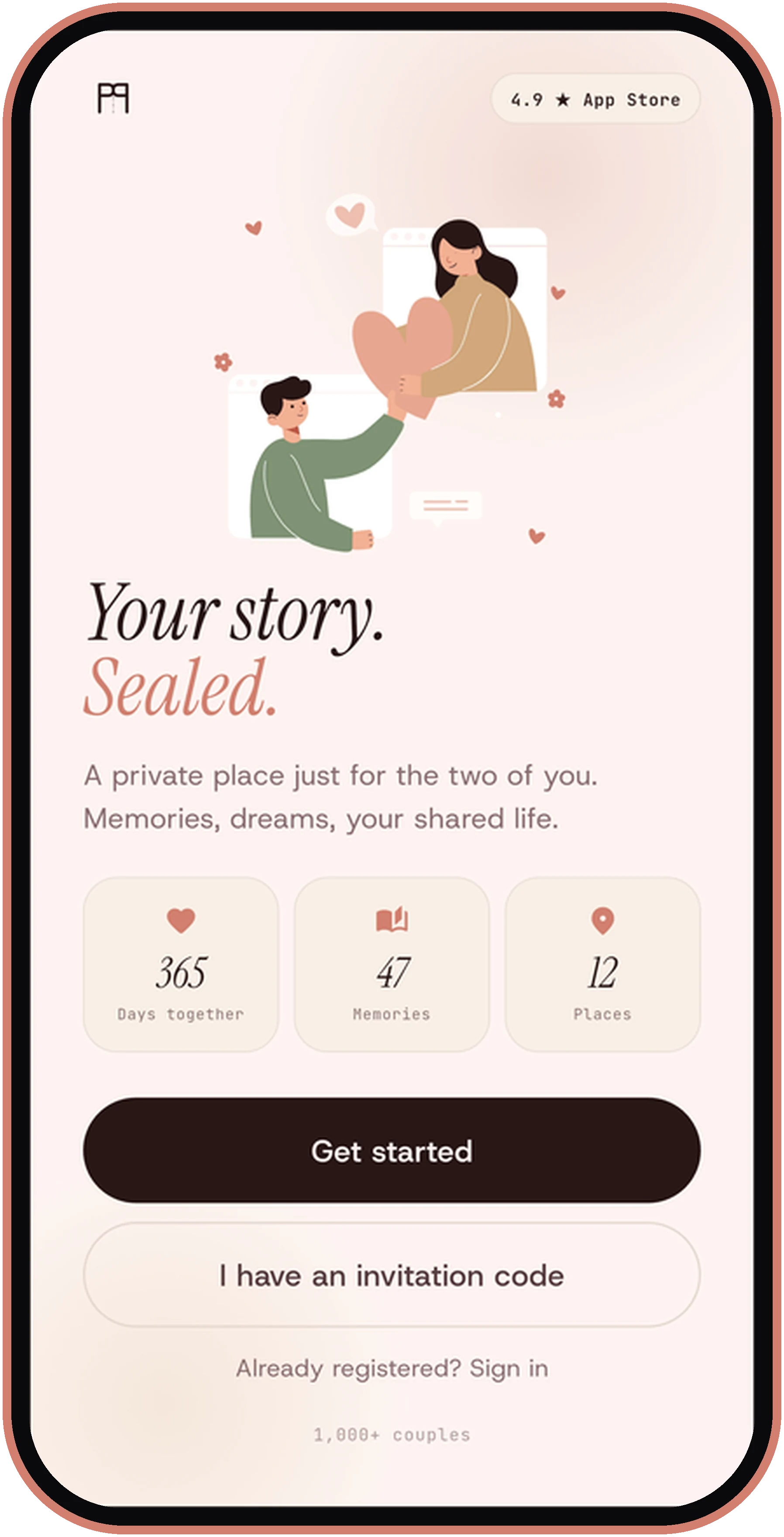
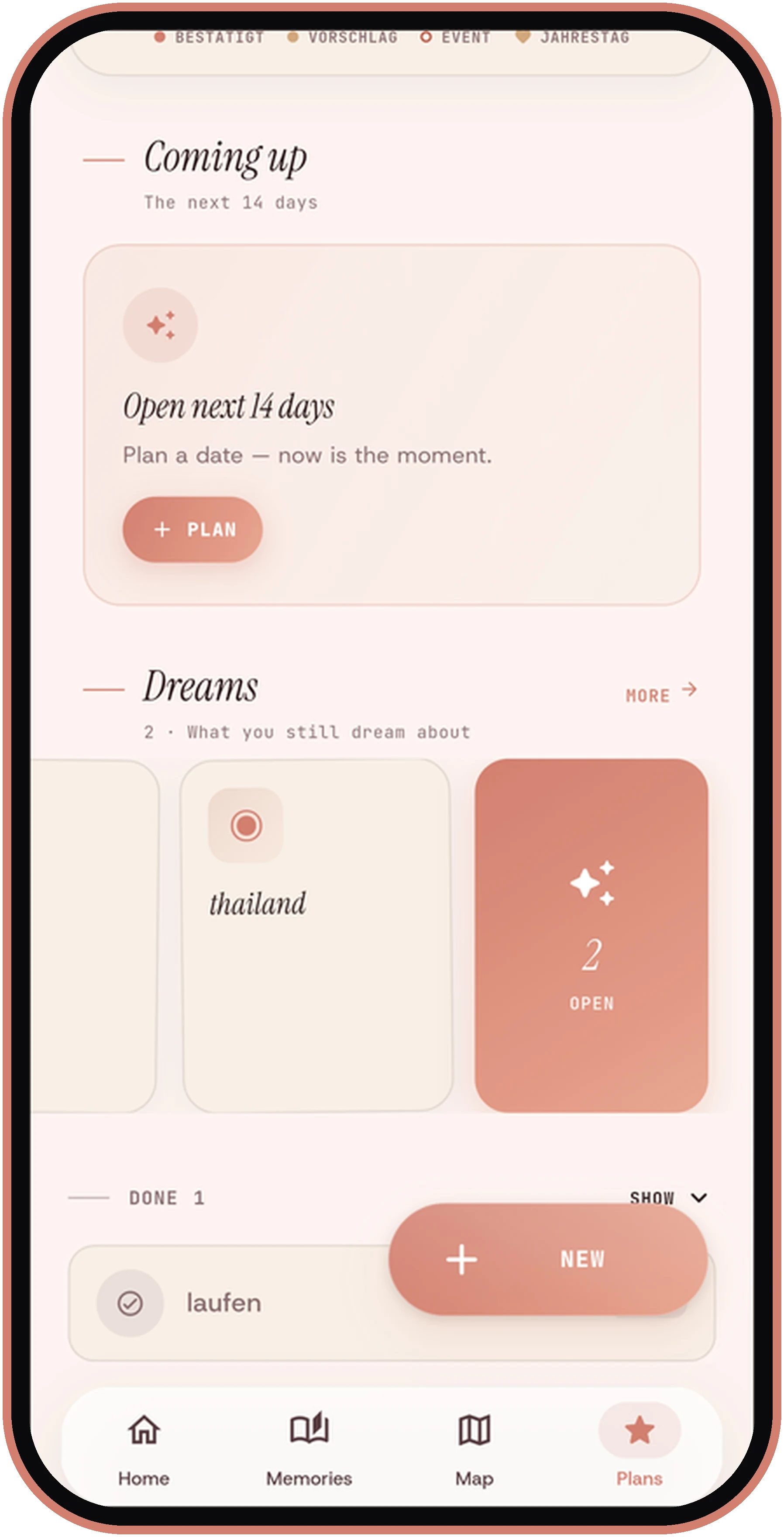
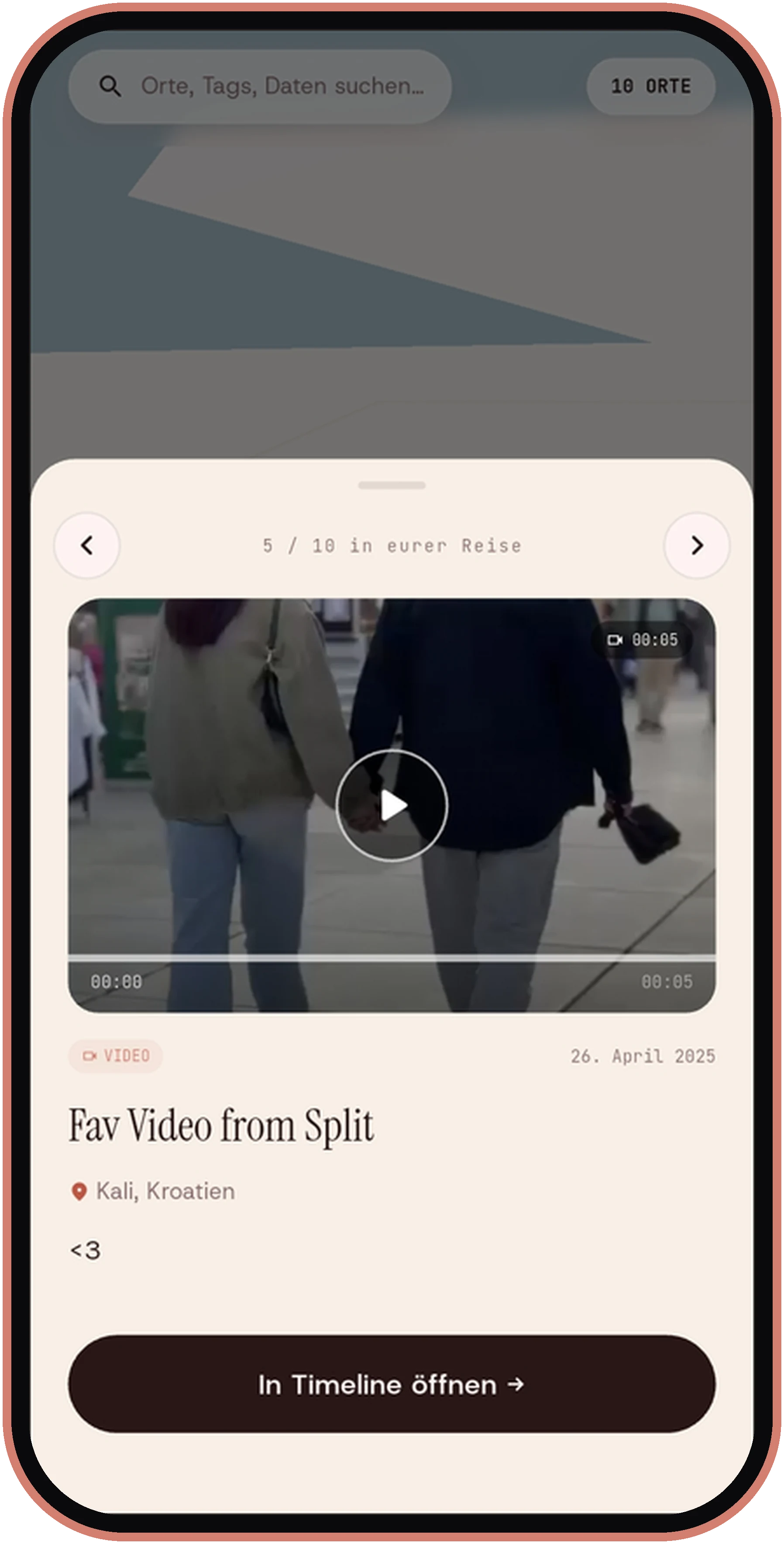
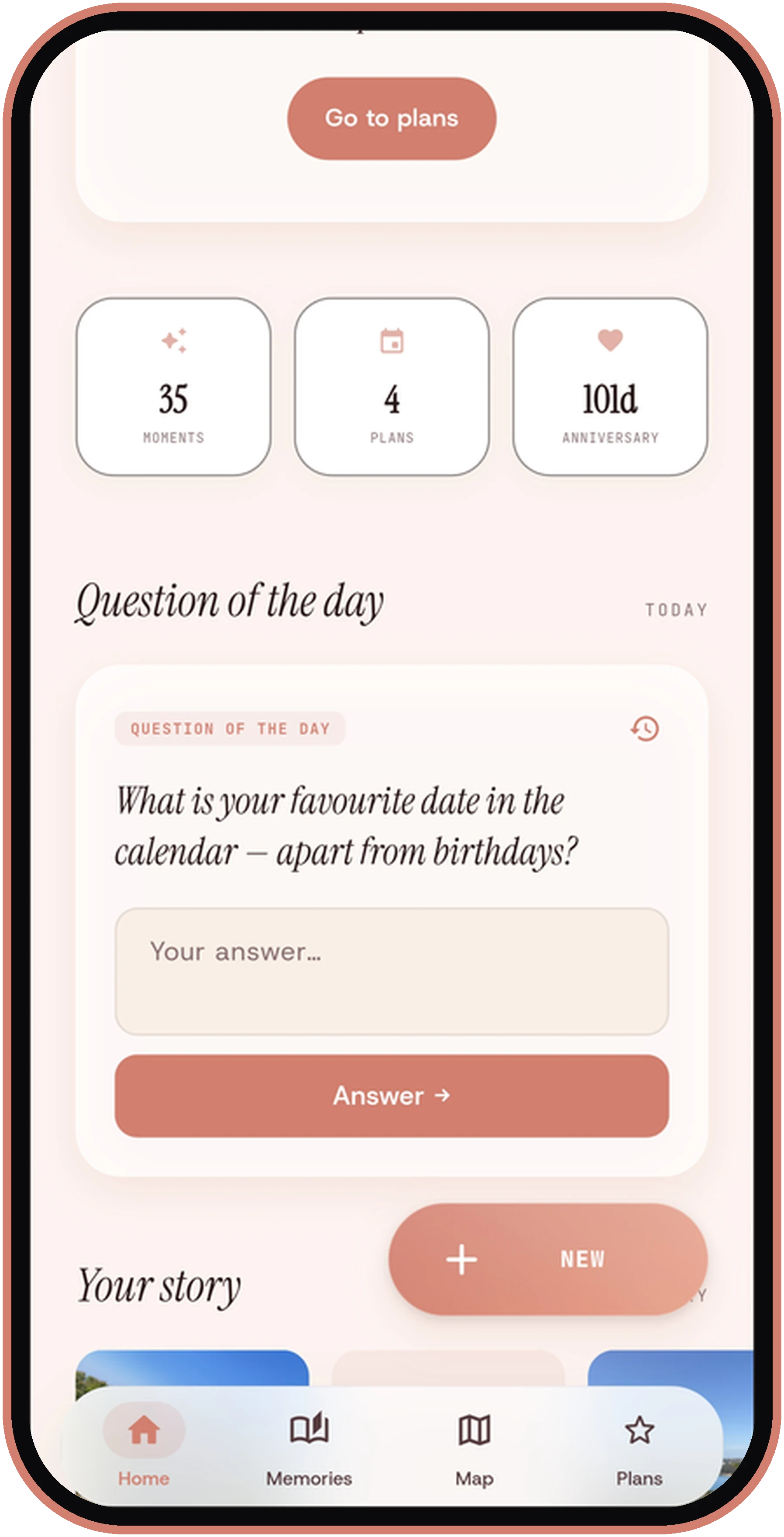
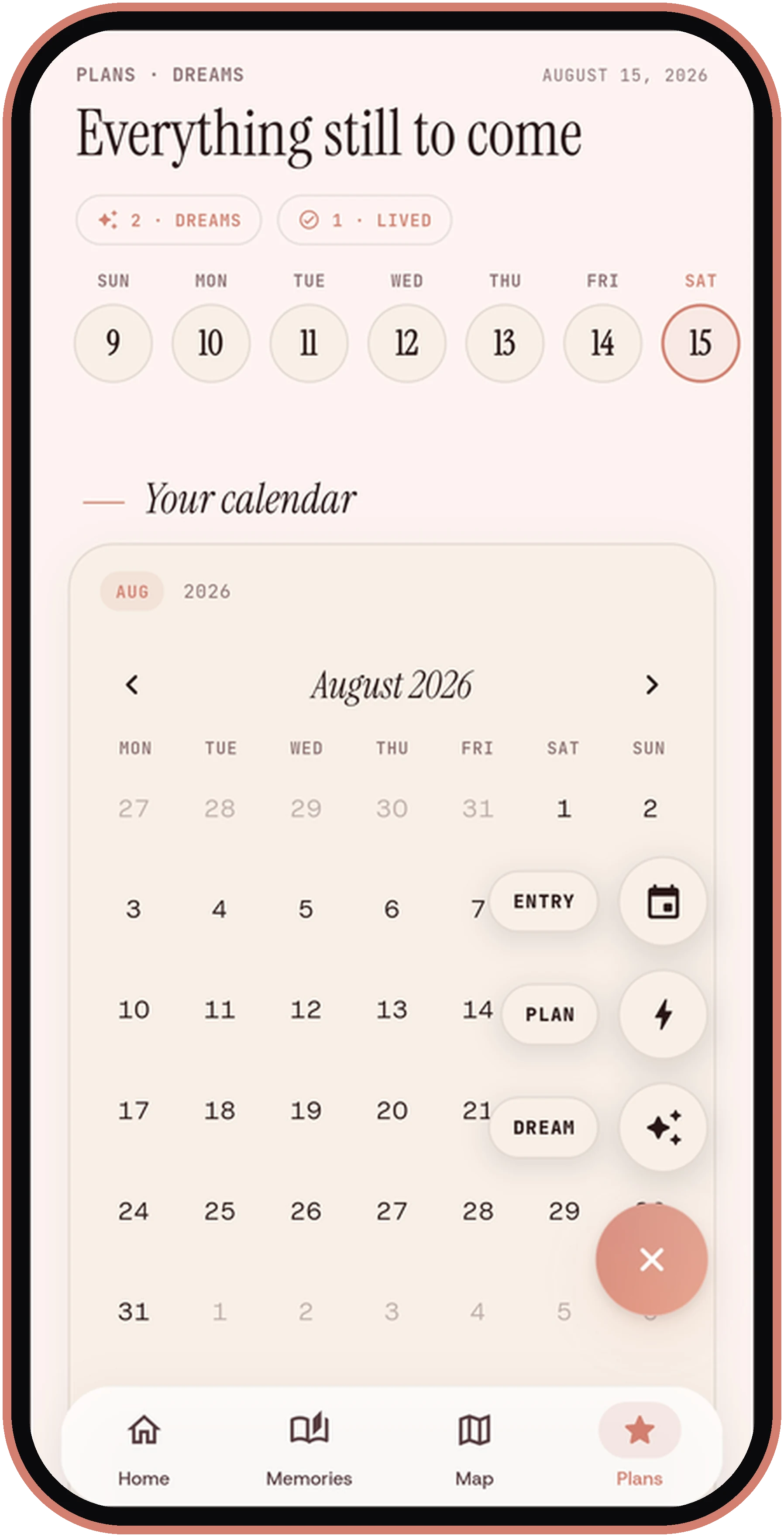
An app for two people: a shared memory album, a map of the places you have been, plans, and small daily rituals. Built solo alongside a full-time master's and a job.
FlutteriOS & AndroidOwn ProductUI/UX
At a glance
- Role
- Solo, architecture to release pipeline
- Period
- 10/2025 to 07/2026, nine months
- Lines of Dart
- approx. 78,200 across 266 files
- Feature modules
- 11
- Cloud Functions
- 24 files, approx. 3,450 lines
- Commits
- 493
My role
Everything, solo
The problem
Couples already keep everything they share in five different places: photos in one app, plans in another, the dates that matter in a third, and the conversation itself somewhere else entirely. Nothing there is built for exactly two people, so nothing there behaves as if the two of them are one account.
How it works
- Clean architecture per feature, each module split into data, domain and presentation. Dependencies point inwards, so a feature's business rules do not know that Firestore exists.
- A serverless backend on Firebase with Auth, Firestore, Storage, Messaging, App Check and Cloud Functions in TypeScript.
- Platform work that is not just screens: iOS home-screen widgets through WidgetKit, offline map downloads and a journey player on Mapbox, and subscriptions through RevenueCat with the entitlement shared across the pair.
- GDPR data export and atomic account deletion as Cloud Functions, a biometric app lock, server-validated single-use pairing tokens, rate limiting and storage quotas.
Stack
Flutter, Dart, Firebase, TypeScript Cloud Functions, RevenueCat, Mapbox, WidgetKit, GitHub Actions.
Outcome
Built solo in nine months, from architecture through interface and backend to an automated release pipeline, next to a full-time master's degree and a job.