Amigon
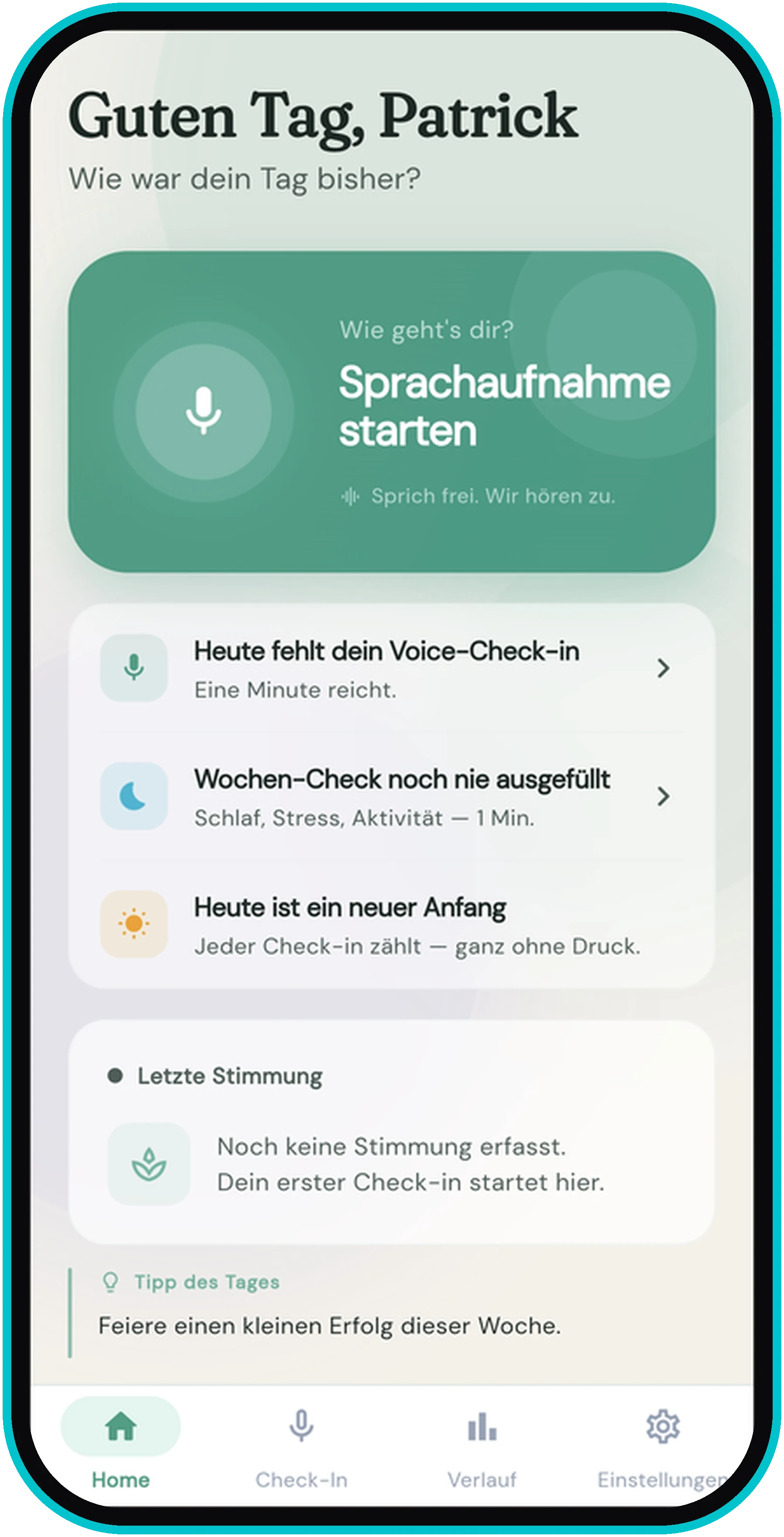
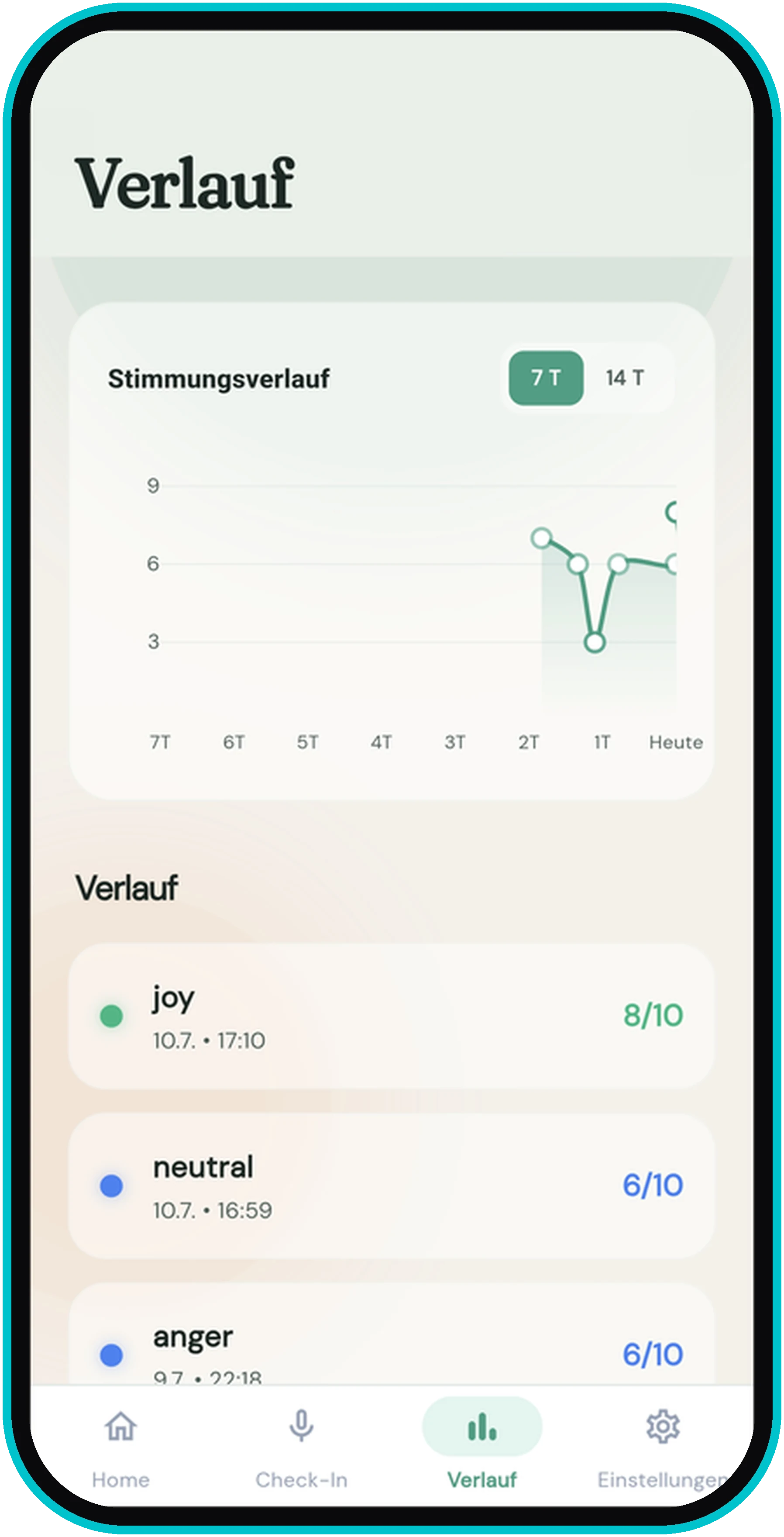
A mental health companion app with AI voice integration. Daily mood tracking, gentle voice journaling, and calm interaction design.
At a glance
- Context
- Master's thesis, FH JOANNEUM Graz
- Supervisor
- Laurin Herbsthofer, MSc PhD
- Method
- Design Science Research, mixed methods
- Requirements survey
- 53 respondents
- Prototype trial
- 20 participants
- System Usability Scale
- 86.8 (SD 10.1, n = 18)
My role
Concept, design and implementation, solo
The problem
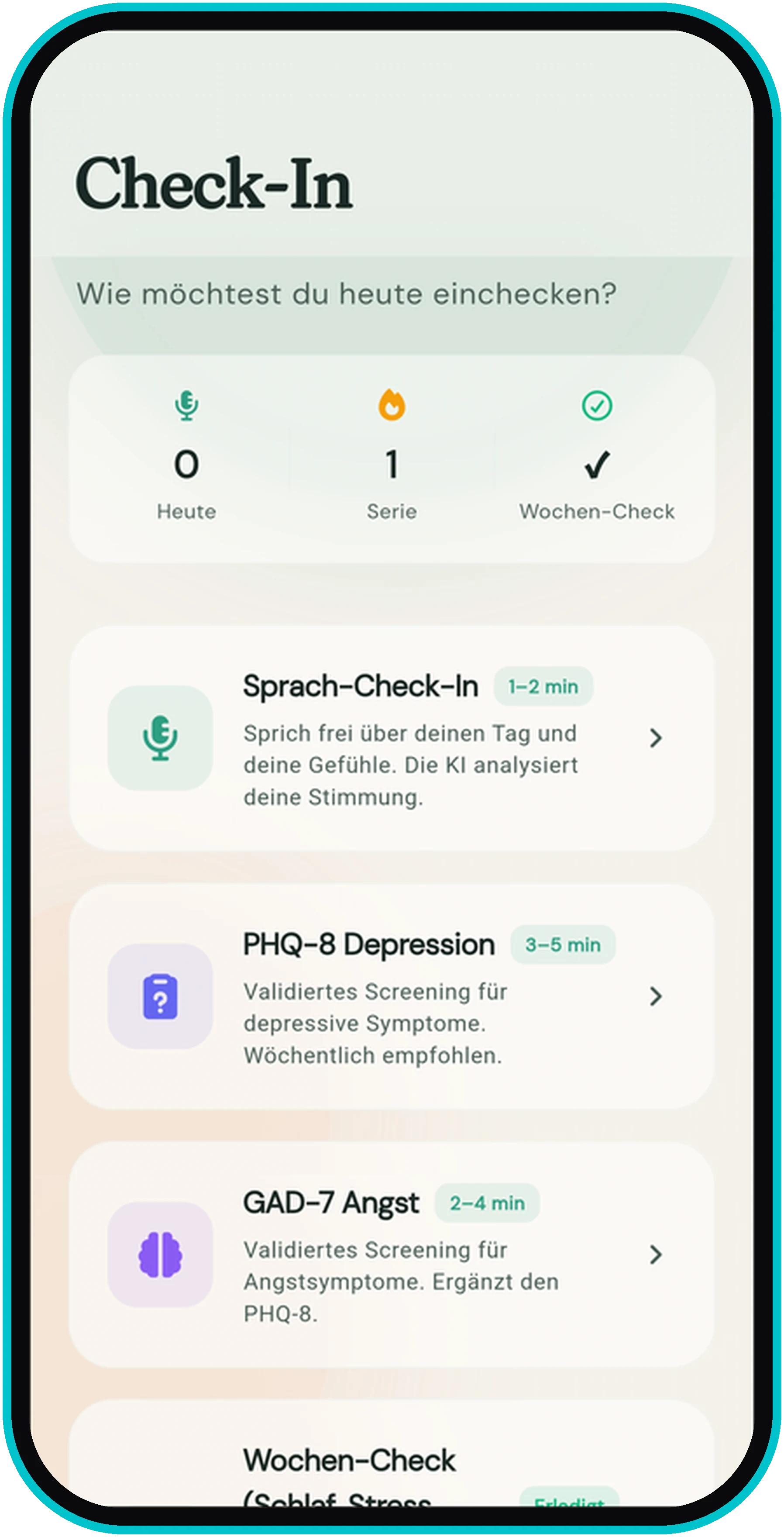
Structured mental-health questionnaires are accurate but tedious, so people stop filling them in. Free-form journalling is easy to keep up but produces nothing a clinician can work with. Amigon sits between the two: a short conversational check-in that still produces structured, standards-compliant output.
How it works
- Four validated screening instruments covering depression, anxiety, wellbeing and affect, rather than inventing new items.
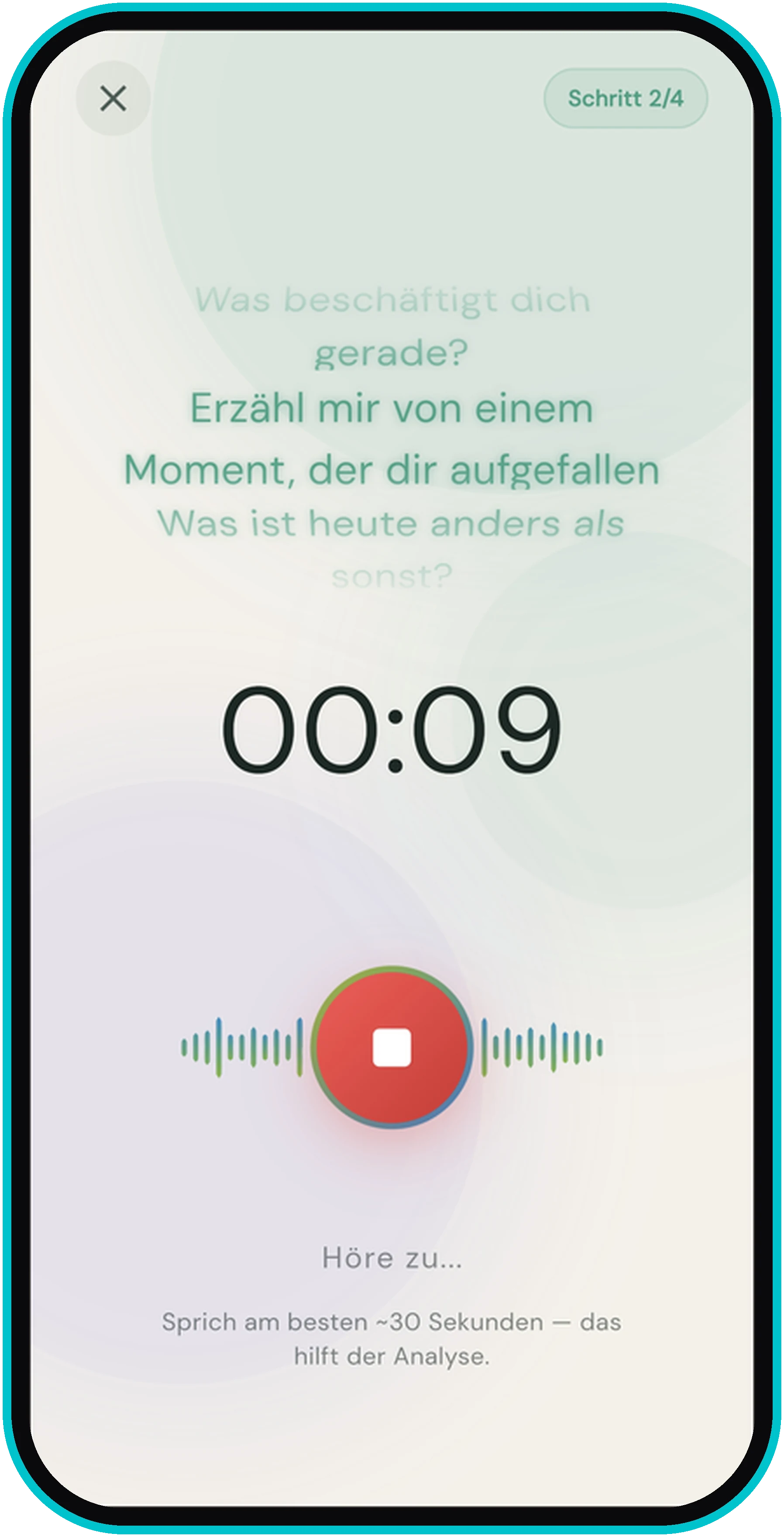
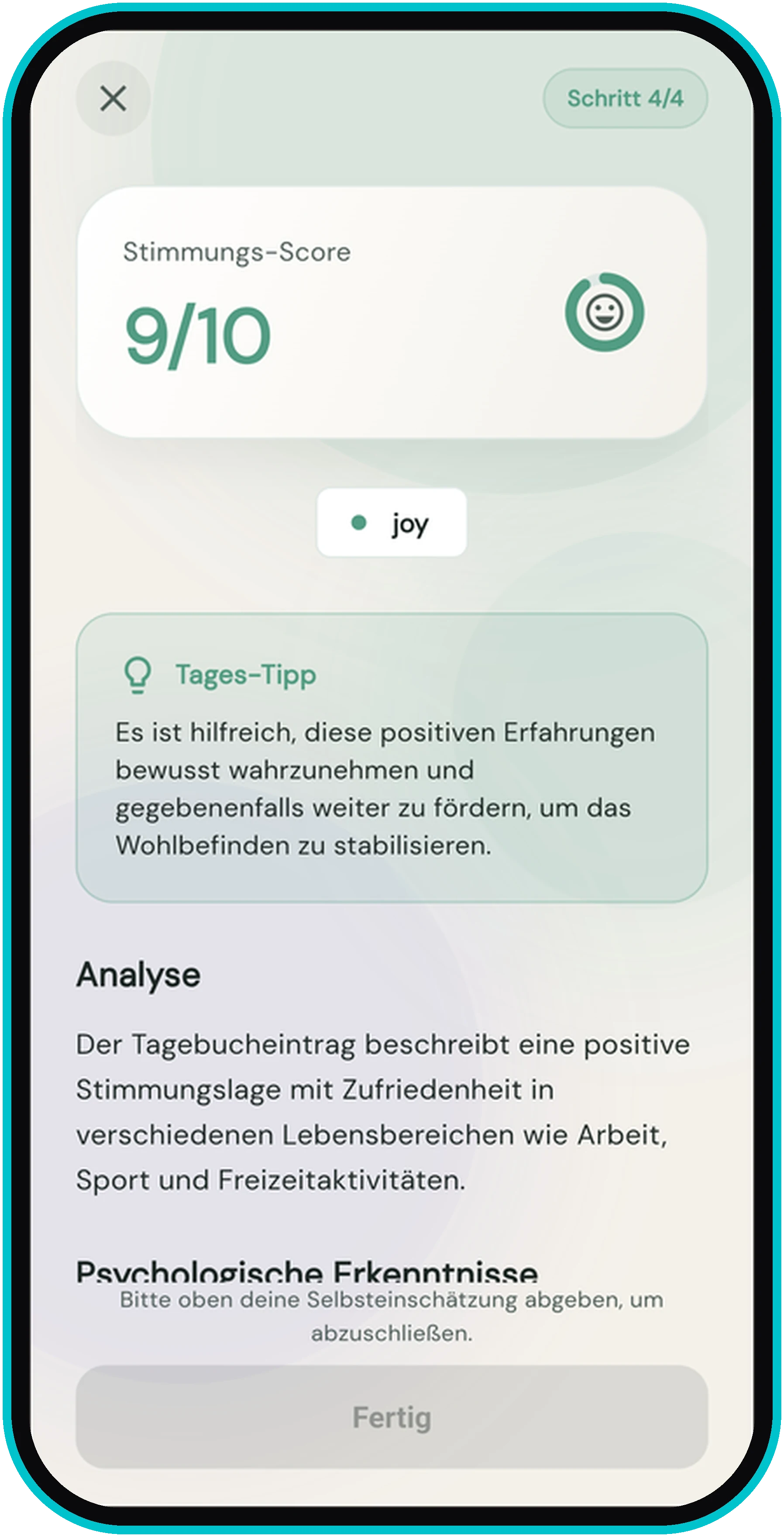
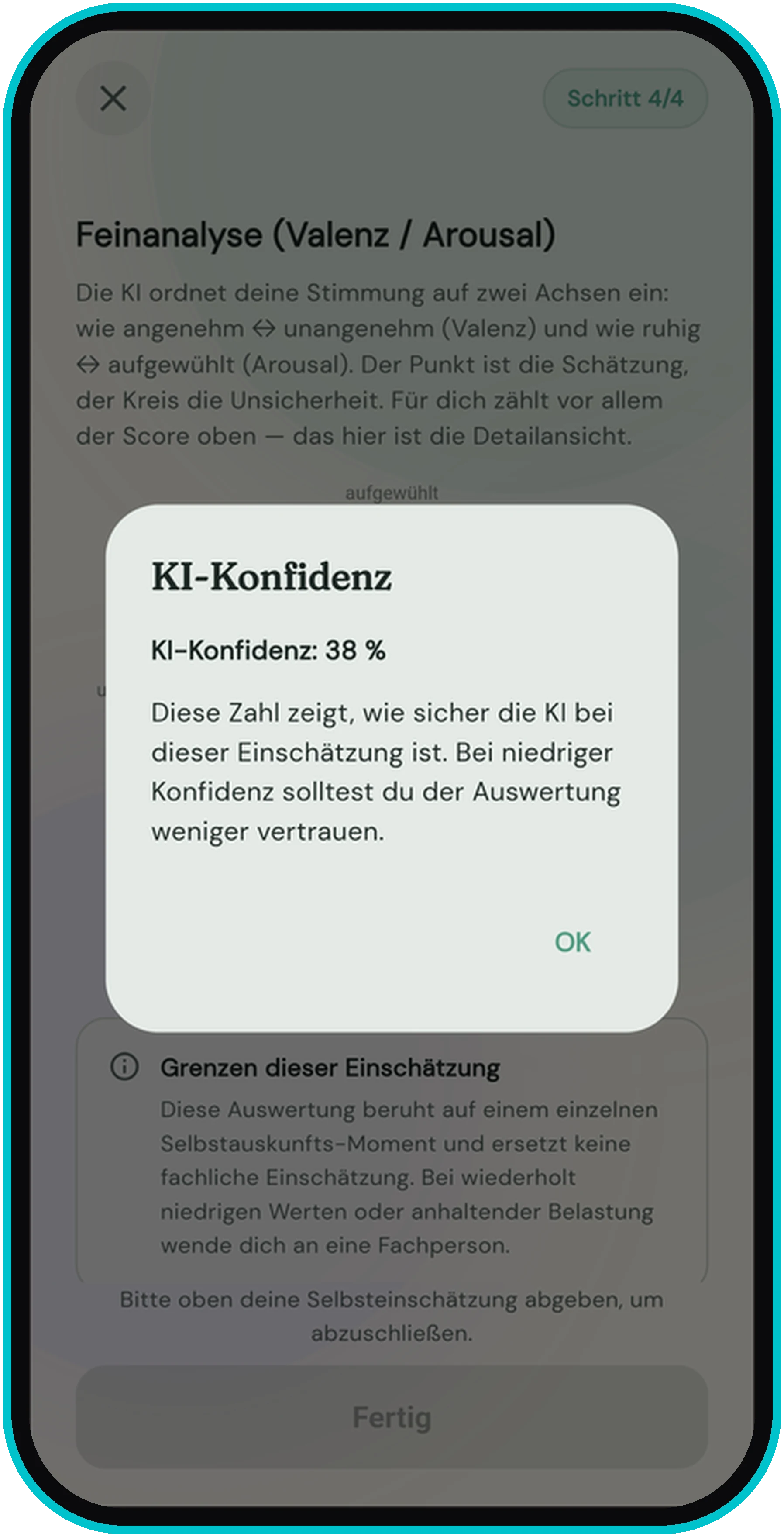
- A voice check-in. Instead of only answering scales, people can speak. Affect is estimated from two channels, acoustic features of the voice and a language model reading what was actually said, and the two are fused with confidence weighting rather than one overriding the other.
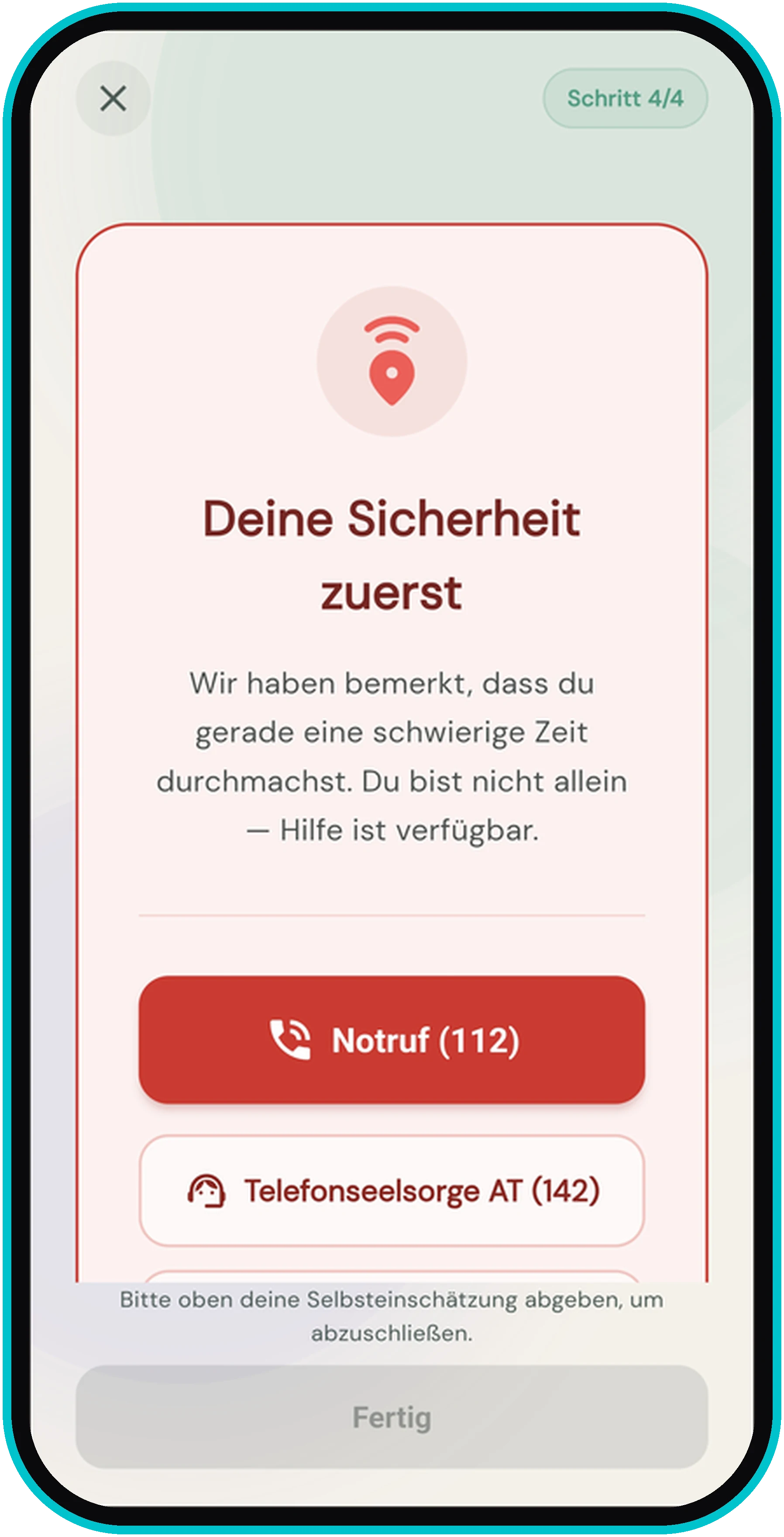
- A safety layer that screens responses for indications of acute risk on a staged model. When it triggers, the app stops what it was doing and shows one screen with two buttons: the emergency number and the crisis helpline. It is a signposting mechanism, not a diagnosis, and the app says so.
- Every measurement becomes an HL7 FHIR R4 Observation, coded against ICD-10-GM, SNOMED CT and LOINC.
Stack
Flutter and Dart, Firebase with Firestore, Auth and Cloud Functions, Python for the acoustic analysis pipeline, an LLM for the linguistic channel, HL7 FHIR R4 with ICD-10-GM, SNOMED CT and LOINC.
Outcome
The SUS score of 86.8 is the headline, against a published average of 68. The free-text answers taught me more. Several people described the voice check-in as easier than the questionnaires precisely because it did not feel like being assessed, which was the entire hypothesis and also the part I was least sure about.